Roof Repair

We use the highest quality roofing materials

fortified roof Birmigham Alabama

What Is a Fortified Roof?

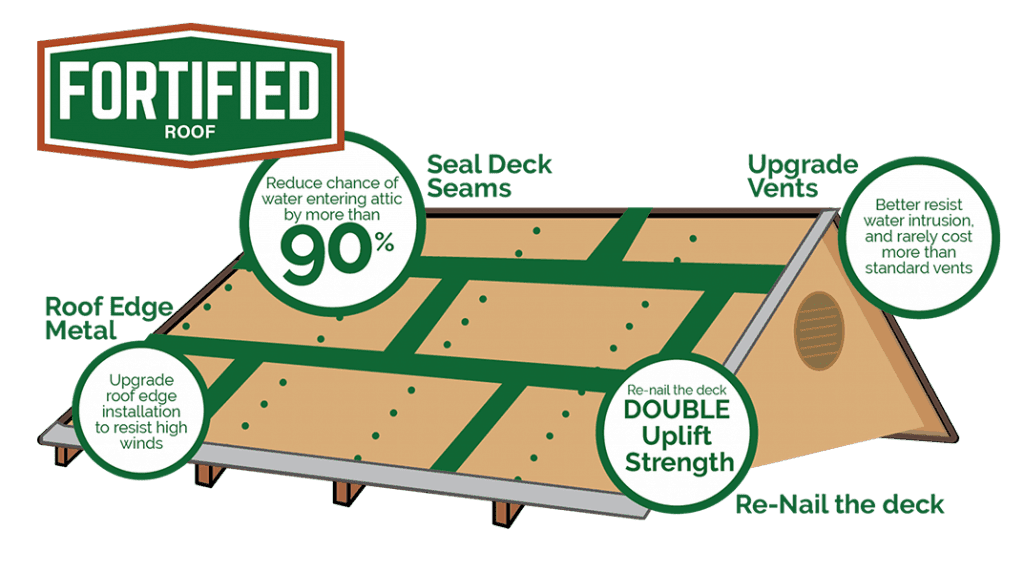
A fortified roof is a high-performance roofing system designed to withstand severe weather conditions, including high winds, heavy rain, and hail. Built to the standards of the FORTIFIED Roof™ program by the Insurance Institute for Business & Home Safety (IBHS), this system adds extra layers of protection where homes are most vulnerable—starting at the roof.

Why Choose Fortified Roofing?

  • Severe Weather Protection: Reinforced against hurricanes, tornadoes, and hailstorms.

  • Insurance Incentives: Many insurers offer discounts for homes with fortified certification.

  • Peace of Mind: Reduces your risk of damage, loss, and costly repairs.

  • Stronger Homes: Engineered to perform beyond standard building codes.

Who Needs Fortified Roofing?

Fortified roofing is ideal for:

    • Homeowners in coastal or storm-prone regions

    • Anyone upgrading after storm damage

    • New builds seeking premium protection

    • Insurance-conscious homeowners looking to reduce premiums

    • Real estate investors seeking long-term durability

Roof Types We Can Fortify

We can apply Fortified standards to most common residential roof systems:

  • Asphalt Shingles

  • Metal Roofs

  • Low-Slope Roofing (certain criteria apply)

Whether you’re re-roofing or building new, we’ll inspect your existing setup and recommend the right fortified solution.

Frequently
Asked Questions

Fortified roofs use stronger installation methods and materials, such as reinforced decking, sealed roof edges, and specialized fasteners, to better resist severe weather than traditional systems.
Yes, in many cases. During replacement, we can add fortified features that meet or exceed the IBHS standards.
It can have a slightly higher upfront cost, but it often pays for itself through insurance savings, fewer repairs, and greater home value.
Yes. Homes can be evaluated and certified through a Fortified Evaluator, often in coordination with your contractor and inspector.
Most installations follow the same timeline as a standard roof, with added inspection steps depending on your region and insurance requirements.